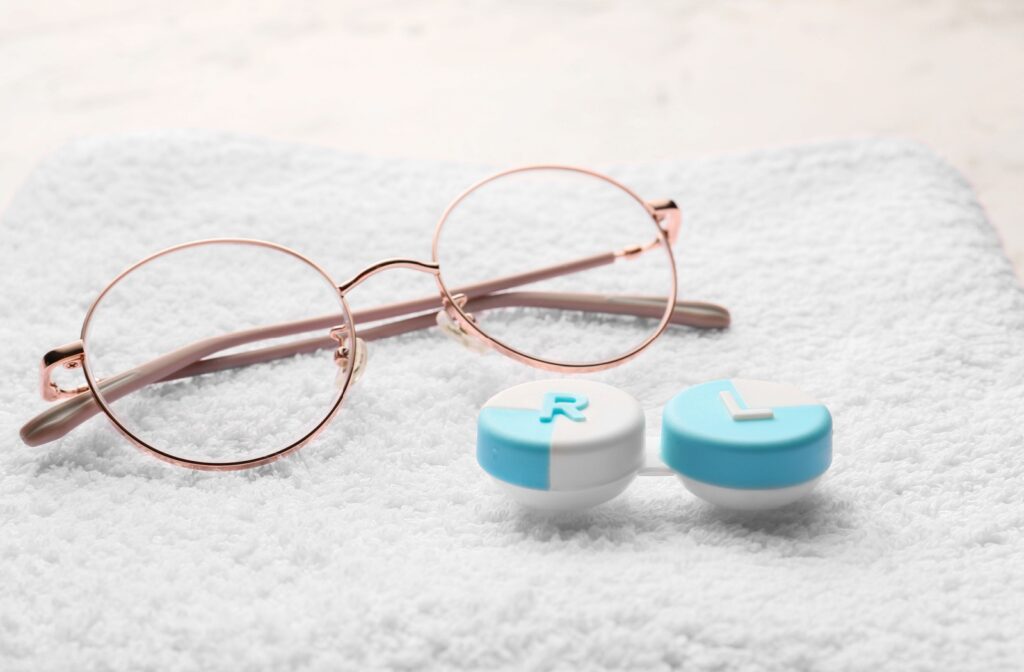
You have a prescription for your glasses, and now you’re thinking about trying contact lenses. You might assume you can use the same prescription for both, a common misconception.
While it seems convenient, the two are not interchangeable. Glasses and contacts require separate prescriptions with different, specific information.
Why Your Glasses and Contact Prescriptions Are Different
The main reason you need 2 different prescriptions comes down to a simple fact: where the lenses sit. One sits on your nose, a short distance from your eyes, while the other rests directly on your eye’s surface. This difference in distance changes the lens power needed to help you see clearly.
The Role of Vertex Distance
Glasses usually sit about 12 millimeters away from your eyes. Contact lenses, on the other hand, have no space between them and your eye. During a comprehensive evaluation, an eye doctor calculates this distance, called the vertex distance, when determining the right power for your contact lens prescription.
Are Glasses Prescriptions Stronger Than Contacts?
Even if your prescription is mild, the power for your contact lenses may differ from your glasses prescription. Adjustments account for the lens’s position on your eye, and are more noticeable in stronger prescriptions.
Extra Measurements for Contact Lenses
A contact lens prescription includes specific measurements that a glasses prescription doesn’t need. These details help make sure the lens fits the unique curve and size of your eye. This leads to both comfortable wear and clear vision.
Do You Need a Separate Exam for Contacts and Glasses?
Yes, you do need a specific evaluation to be fitted for contact lenses. While it can be part of your comprehensive eye exam, it involves extra steps. This process helps us find a lens that fits your eye shape and your lifestyle while keeping your eyes healthy.
What to Expect at a Contact Lens Fitting
During a fitting, your eye doctor measures the curve of your cornea and the size of your iris. They also look at your tear film to see if you are a good candidate for contacts, especially if you experience symptoms of dry eye. You’ll often receive a trial pair to test out before you commit.
The Importance of a Proper Fit
A poorly fitting contact lens can cause discomfort or even damage your cornea over time. The right fit helps you see clearly and keeps your eyes feeling great all day. Our eye doctors in Grayslake can help find a comfortable and appropriate fit for you or your family members.
What Each Prescription Tells You
At first glance, both prescriptions might look similar with their numbers and abbreviations. However, they contain distinct information tailored to either glasses or contacts. Each detail is important for your vision correction.
Information on a Glasses Prescription
Your glasses prescription primarily includes these details:
- Sphere (SPH): This is the main power of the lens.
- Cylinder (CYL): This indicates the power needed for astigmatism.
- Axis: This number shows the direction of the astigmatism correction.
- Pupillary distance (PD): This measures the distance between your pupils.
Information on a Contact Lens Prescription
A contact lens prescription includes the power information plus a few more items:
- Base curve (BC): This measures the curvature of the back surface of the contact lens.
- Diameter (DIA): This is the total width of the contact lens.
- Lens brand or type: This specifies the brand and material of the lens prescribed for you, as there are many different types of contact lenses available.
How Contact Lenses Affect Your Eyes
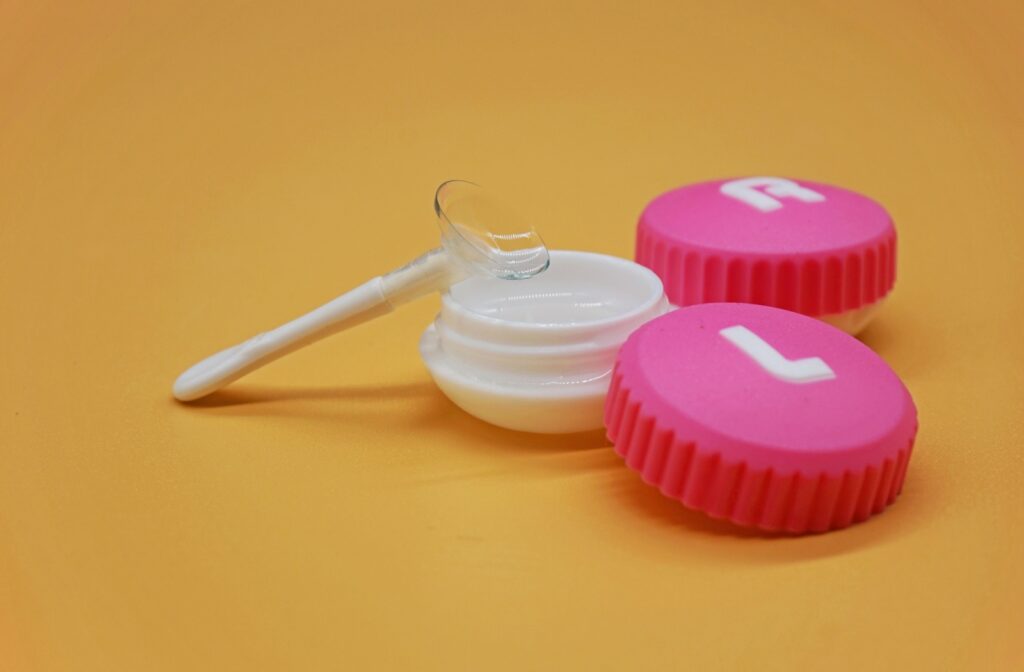
Because contact lenses sit directly on your eyes, they interact with them differently than glasses do. Understanding this relationship can help you keep your eyes comfortable and healthy. It’s all about working with your body’s natural processes.
Oxygen Flow to the Cornea
Your cornea, the clear front part of your eye, gets oxygen directly from the air. A contact lens can reduce the amount of oxygen that reaches it. Modern lenses, especially silicone hydrogel types, are designed to allow more oxygen to pass through, which helps keep your eyes healthy.
Interaction with Your Tear Film
Contact lenses can sometimes absorb moisture from your eyes, which may lead to dryness. Some lenses are made with technology to help them retain moisture. These can be a great option if your eyes tend to feel dry throughout the day.
Potential for Protein Buildup
Proteins and other deposits from your tears can build up on contact lenses over time, which is why proper cleaning and disinfection are so important. Daily disposable lenses are a simple option to help avoid this issue. You just start with a fresh, clean pair every day.
Choose the Right Type of Contact Lens
There are many types of contact lenses available today to suit different vision needs and lifestyles. Your eye doctor can talk with you about your daily activities and recommend an option that works well for you or your family. You have plenty of choices!
Daily Disposable Lenses
These are single-use lenses that offer a lot of convenience because you don’t need to clean them. You wear them once and then toss them out at the end of the day. They are a great choice for people with allergies or dry eyes since there is no buildup of deposits.
Monthly and Biweekly Lenses
These lenses are designed to be worn for a longer period, from 2 weeks to a full month, before replacement. They require nightly cleaning and proper storage in a case with a specific solution. This routine helps keep them hygienic and comfortable to wear.
Specialty Lenses for Specific Needs
Some vision conditions call for more specialized lenses. A few popular options include:
- Lenses for astigmatism: Also known as toric lenses, these are designed to correct the irregular eye shape associated with astigmatism.
- Lenses for dry eyes: It is possible for people with dry eye symptoms to find comfortable lenses. If you’ve been told you can’t wear contacts due to dryness, you might be surprised to learn that wearing contacts with dry eyes is possible with the right lens.
- Scleral lenses: These are larger lenses that rest on the white part of the eye, creating a fluid-filled dome over the cornea. They are especially helpful for people with irregular corneas, such as those with keratoconus.
Comfortable, Clear Vision Starts Here
Ready to see if contact lenses are the right choice for your family? At Vision Care Grayslake, our team is happy to answer your questions and help you through the process. Call us today to schedule your contact lens fitting!