
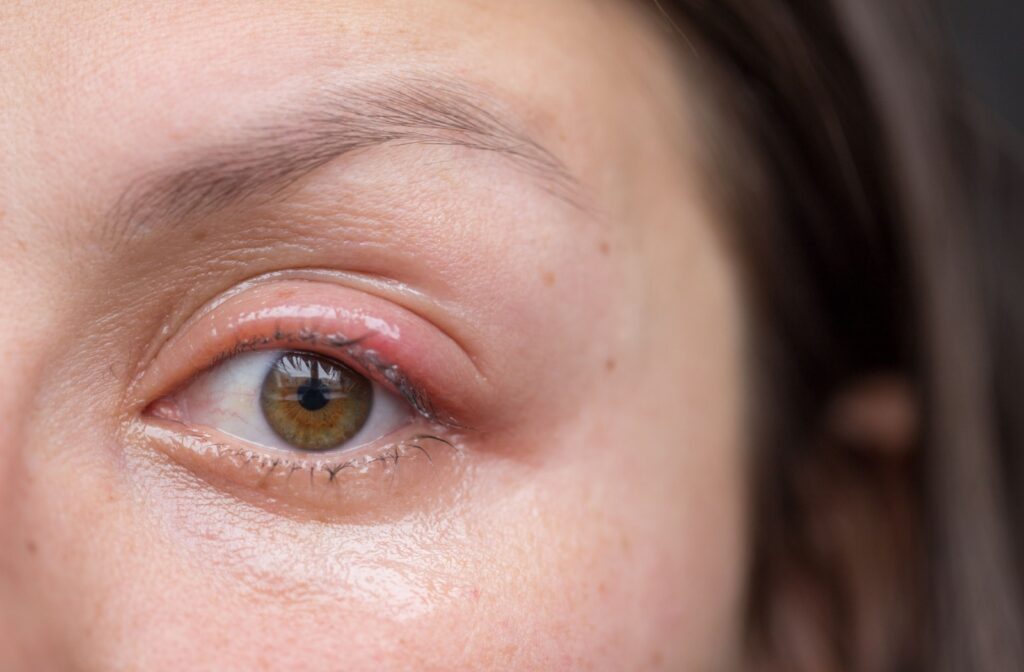
Waking up with itchy, crusty, or swollen eyelids can be uncomfortable and frustrating for anyone in your family. This common condition, known as blepharitis, can affect both children and adults.
The timeline for relief from blepharitis varies—it can clear up in a few weeks with consistent care or, for chronic cases, it may require long-term management. With a simple daily routine, you can help manage the symptoms, which sometimes overlap with dry eye disease, and get your eyes feeling comfortable again.
Our team at Vision Care Grayslake is here to help you find solutions.
A Simple Look at Eyelid Irritation
Blepharitis is a common condition that causes your eyelids to become inflamed. You might notice that your eyelids look red and swollen or that your eyelashes have flaky, crusty bits at the base. Blepharitis can be a nuisance for anyone in the family, from kids to grandparents.
The good news is that blepharitis is usually not contagious. When managed with a proper care routine, it also typically doesn’t cause any lasting harm to your eyesight.
Key Signs & Symptoms to Watch For
The symptoms of blepharitis can come and go, and they often affect both of your eyes at the same time. You might experience:
- A gritty or burning feeling in your eyes
- Red, swollen, or itchy eyelids
- Crusty debris at the base of your eyelashes, especially in the morning
- Watery eyes
- Eyelids that stick together
- More frequent blinking
- Sensitivity to light
What Causes This Pesky Problem?
Blepharitis often happens when the tiny oil glands near the base of your eyelashes become clogged. This blockage can lead to irritation and may create a welcoming environment for bacteria.
While the exact causes of blepharitis aren’t always clear, a few factors can contribute to the issue.
Blocked Glands
Sometimes, the oil glands in your eyelids just don’t work as they should. This can cause blockages that lead to the redness and swelling you see and feel.
Skin Conditions
If you have a skin condition like dandruff on your scalp or rosacea, you might be more likely to experience blepharitis.

Find Relief & How Long It May Take
How long blepharitis lasts really depends on its type and how consistently you care for your eyelids. For some people, it’s a short-term issue that gets better in a few weeks. For others, it can be a long-term condition that needs ongoing management to keep flare-ups at bay.
At-Home Care for Quick Relief
A consistent daily routine is often the first step to feeling better. A few simple habits can make a big difference in how your eyes feel.
- Warm Compresses: Gently press a warm, clean washcloth over your closed eyes for about five minutes. This helps loosen crusts and soothes your eyelids.
- Eyelid Scrubs: After the compress, you can gently scrub the base of your eyelashes with a clean cloth or cotton swab using a mix of water and tear-free shampoo.
- Pause on Makeup & Contacts: Give your eyes a break from makeup and contact lenses until the irritation subsides. This reduces further strain on your eyelids.
When Blepharitis Seems to Linger
If your symptoms don’t improve with at-home care, the condition might be chronic. This means that it may be time to visit one of our eye doctors in Grayslake. Chronic blepharitis isn’t about finding a one-time cure—it’s about learning to manage the symptoms to prevent flare-ups and keep your eyes comfortable.
A consistent eyelid hygiene routine is an effective way to keep your eyes feeling good long-term. If things aren’t getting better, our team in Grayslake can help develop a plan tailored to your family’s needs. With the right care, you can find relief from discomfort and get your eyes feeling normal again. If you have questions about eyelid care or are struggling with persistent symptoms, our team at Vision Care Grayslake can help find a solution that works for you. Schedule a visit to get the support your family needs.